
Technical Specifications and Architectural Breakdown
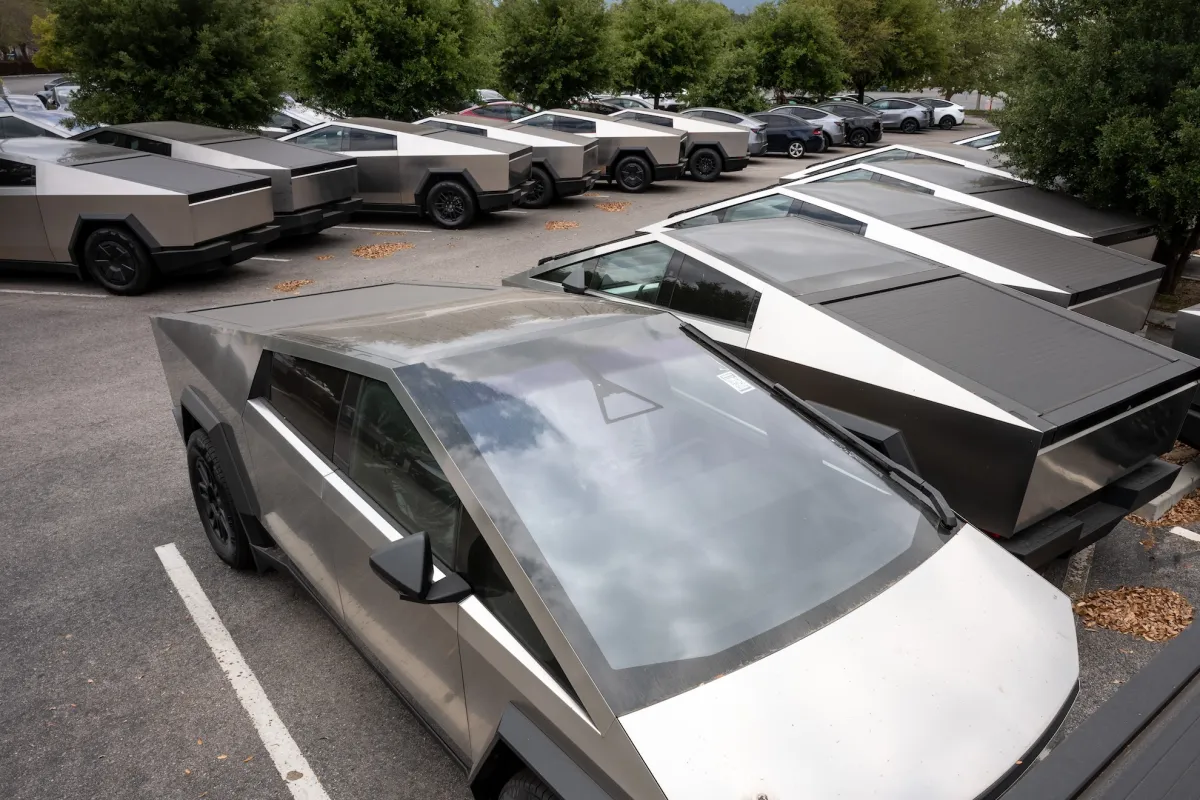
The Cybertruck’s market resilience is rooted in its unconventional engineering. Unlike traditional body-on-frame trucks that rely on stamped steel, the Cybertruck utilizes an exoskeleton composed of ultra-hard 30X cold-rolled stainless-steel alloy. This material choice serves a dual purpose: it provides significant structural rigidity and eliminates the need for clear-coat paint, reducing long-term maintenance concerns associated with exterior body damage.
Under the hood—or rather, within the chassis—the vehicle employs a tri-motor architecture in its high-performance variants, delivering torque-vectoring capabilities that allow for acceleration figures previously reserved for hypercars. The integration of 800-volt electrical architecture facilitates faster charging cycles, a critical metric for enterprise users who prioritize uptime. Furthermore, the steer-by-wire system and rear-wheel steering provide a turning radius smaller than many sedans, effectively decoupling the vehicle’s physical footprint from its maneuverability. These technical choices, while controversial in their departure from automotive norms, have created a vehicle that offers a distinct performance profile, justifying its premium valuation in the secondary market.
Industry Landscape and Competitive Comparison
When evaluating the Cybertruck against established incumbents, the primary differentiator is the absence of a traditional internal combustion engine. While legacy manufacturers have focused on electrifying existing platforms, Tesla’s “clean sheet” approach has resulted in a vehicle that operates under a different set of efficiency metrics. The following table outlines how the Cybertruck compares to high-end alternatives currently dominating the utility landscape.
| Model | Powertrain | Avg. Days on Market | Primary Advantage |
|---|---|---|---|
| Tesla Cybertruck | Electric (Tri-Motor) | 39.1 | Performance-to-Weight Ratio |
| Ford F-150 Lightning | Electric (Dual-Motor) | 68.0 | Familiarity & Utility |
| Chevrolet Silverado 1500 | Internal Combustion | 62.5 | Established Ecosystem |
The data highlights a clear divergence: while traditional trucks and even early-adopter EVs are seeing inventory linger, the Cybertruck maintains a rapid turnover rate. This indicates that buyers in the secondary market are not looking for a traditional truck experience, but are specifically seeking the performance and technological ecosystem that the Tesla platform provides. The urgency is further compounded by manufacturing cycles and the eventual production sunset projected for 2027, which has created a speculative floor for current pricing.
Practical Consumer & Enterprise Takeaways
For the prospective buyer, the current market presents a complex cost-benefit analysis. The high resale value of the Cybertruck is a double-edged sword; while it indicates strong asset retention, it also means that entry costs remain elevated compared to MSRP. Enterprise users, however, may find value in the vehicle’s low maintenance requirements. Because the stainless-steel exoskeleton is resistant to corrosion and the electric drivetrain requires fewer moving parts than a combustion engine, the total cost of ownership over a five-year period may be lower than a traditional heavy-duty truck, provided the vehicle is utilized in high-mileage scenarios.
Buyers should also consider the software-defined nature of the vehicle. Unlike traditional trucks, the Cybertruck receives periodic over-the-air updates that can improve range, charging speed, and driver-assist capabilities. This creates a “future-proofing” effect that is absent in legacy trucks. However, potential owners must be prepared for the realities of proprietary repair networks. Unlike a standard pickup that can be serviced at local independent shops, the Cybertruck’s specialized components necessitate a reliance on Tesla’s service infrastructure, which remains a bottleneck in certain geographic regions.
Frequently Asked Questions
Is the stainless-steel body difficult to maintain in harsh climates?
While the stainless steel is resistant to rust, it is susceptible to surface staining and fingerprints. Routine maintenance involves specific cleaning protocols to prevent oxidation from road salts or environmental contaminants. It is not “maintenance-free,” but it does eliminate the costs associated with body shop paint repair.
How does the steer-by-wire system affect long-term reliability?
Steer-by-wire replaces the mechanical linkage between the steering wheel and the front wheels with electronic signals. This system is redundant by design, with multiple motors and sensors ensuring safety. While it represents a significant departure from mechanical steering, it has been engineered to meet stringent safety standards, though long-term repair costs remain higher than traditional steering racks.
Should enterprise buyers invest in the Cybertruck for commercial fleets?
The Cybertruck offers significant advantages for fleets that operate within urban environments, specifically due to its maneuverability and low fuel costs. However, fleet managers must evaluate the availability of commercial charging infrastructure. If the fleet is based in a region with limited high-speed charging, the vehicle’s utility may be compromised compared to a diesel or gasoline counterpart.
The Bottom Line
The Tesla Cybertruck’s dominance in the used market is a testament to the power of brand loyalty and the appeal of high-performance electrification. It is not a conventional truck, nor does it attempt to compete on the traditional metrics of utility that have defined the segment for decades. Instead, it offers a high-tech, performance-oriented alternative that has successfully captured a distinct segment of the population. While the current market velocity is partially fueled by scarcity and early-adopter fervor, the engineering fundamentals suggest that the vehicle will remain a significant presence in the automotive landscape for the foreseeable future. For the buyer, the decision hinges on whether the performance, software ecosystem, and unique utility of the platform outweigh the costs of proprietary service and the premium entry price.
 Ishaan Verma
 Maya Deshmukh