
Technical Specifications and Architectural Breakdown: The Engineering of Failure
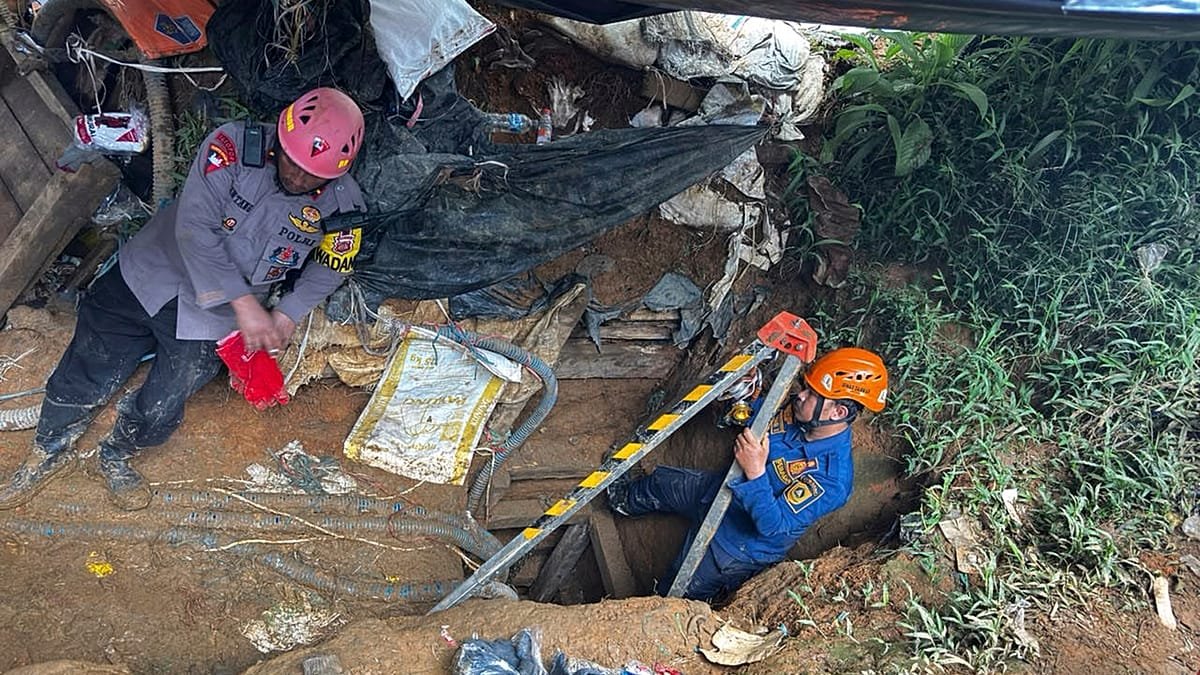
The rescue operation in Bogor presents a complex engineering challenge that differentiates it from standard search and recovery efforts. The site is not merely a flooded tunnel; it is an unregulated subterranean network that lacks the structural reinforcement, ventilation systems, and geotechnical mapping required for safe operation. When water inundated the shaft, the structural integrity of the surrounding earth—already compromised by haphazard excavation—began to fail.
Rescue teams are currently deploying high-capacity submersible pumps to mitigate the water level. However, the technical difficulty lies in the rate of extraction. The influx of groundwater, fed by the region’s topography, creates a dynamic equilibrium that is difficult to disrupt. If water is removed too quickly, the pressure differential against the tunnel walls can trigger a total collapse of the shaft, burying those trapped within. Rescuers must utilize rope-access gear on steep, unstable terrain while managing the delicate balance of hydraulic pressure. The absence of geological schematics means that every meter of progress requires manual probing to ensure that the tunnel walls, composed of loose soil and unreinforced rock, do not shift under the weight of the rescue equipment.
Industry Landscape and Competitive Comparison: Professional vs. Informal Infrastructure
The disparity between professional mining operations and illegal sites is absolute. Professional mining is governed by stringent international standards, such as those set by the International Council on Mining and Metals (ICMM), which mandate extensive environmental impact assessments, automated ventilation monitoring, and seismic bracing. In contrast, illegal gold mines are characterized by ad-hoc construction and a total lack of oversight. The following table outlines the fundamental differences between these operational models.
| Feature | Professional Mining | Illegal Gold Mine |
|---|---|---|
| Geological Planning | Comprehensive seismic and structural mapping | None; trial-and-error excavation |
| Safety Infrastructure | Automated ventilation and structural bracing | Absent; reliance on makeshift supports |
| Regulatory Oversight | Continuous government and independent audits | None; clandestine operations |
| Emergency Response | Real-time telemetry and rapid-response teams | Delayed; reliant on local, untrained residents |
Practical Consumer & Enterprise Takeaways: Supply Chain Accountability
For global enterprises, the existence of illegal gold mines presents a significant supply chain risk. Gold extracted from these sites often enters the legitimate market through middlemen, effectively “laundering” the metal into the global supply chain. For investors and consumers, the moral and financial risks are substantial. Enterprise procurement teams must prioritize sourcing from refineries that adhere to the London Bullion Market Association (LBMA) Good Delivery List, which requires rigorous provenance tracking.
The cost-benefit trade-off is clear: while illegal gold may appear cheaper due to the total avoidance of safety, environmental, and labor costs, the long-term liability for corporations associated with such sources is immense. Organizations must implement blockchain-based tracking or third-party audits to ensure that the gold in their products—whether in electronics or jewelry—is not linked to operations that disregard human life and environmental stability. Upgrading supply chain transparency is no longer a corporate social responsibility initiative; it is a fundamental risk-mitigation strategy.
Frequently Asked Questions
Why is it so difficult to regulate small-scale, illegal mining operations in remote regions?
Regulating these sites is hampered by the sheer geographical scale of mining regions and the economic desperation of the local populations involved. Many of these mines are operated by impoverished residents who view the danger as a necessary trade-off for survival. Without viable economic alternatives or government-led formalization programs, these sites remain hidden from authorities until a disaster occurs.
What technologies could potentially prevent such catastrophes in the future?
Satellite-based synthetic aperture radar (SAR) is increasingly being used to monitor ground deformation and unauthorized land use. If deployed at scale, this technology could identify illegal excavation patterns early. Additionally, low-cost seismic sensors and groundwater level monitors could provide early warning systems that alert local communities to impending flooding or structural instability before the site becomes a death trap.
How can consumers verify that the gold they purchase is ethically sourced?
Consumers should look for certifications from the Responsible Jewellery Council (RJC) or ensure that retailers provide documentation confirming the gold has been processed by certified refineries. These entities maintain strict chain-of-custody protocols that exclude gold from unregulated, high-risk sources. If a product lacks transparent origin documentation, the risk that it originated from an illegal operation increases significantly.
The Bottom Line
The tragedy in Bogor is a systemic failure, not an isolated accident. While the immediate focus remains on the heroic efforts of the 325-member rescue team, the long-term objective must be the systematic dismantling of the illegal mining economy. The technical challenges of the rescue—draining flooded, unreinforced shafts—are the direct result of a lack of engineering standards. Until industry-wide transparency and rigorous supply chain auditing become the global standard, the human and environmental costs of illegal gold mining will continue to mount. Professionalization of the sector is not merely a regulatory preference; it is the only viable path to preventing further loss of life in the pursuit of mineral wealth.
 Maya Deshmukh