
Technical Specifications and Architectural Breakdown
At its core, the Nothing Ear note departs from the standard “dumb” transducer model. While traditional Bluetooth earbuds act as passive conduits for audio streams, the Ear note functions as an edge-computing endpoint. The device utilizes a dedicated onboard processing unit—separate from the standard Bluetooth SoC—to handle low-latency audio capture and initial metadata processing. This architecture is essential for maintaining the sub-millisecond latency required to feed high-fidelity audio into a transcription engine without creating a perceptible lag for the user.
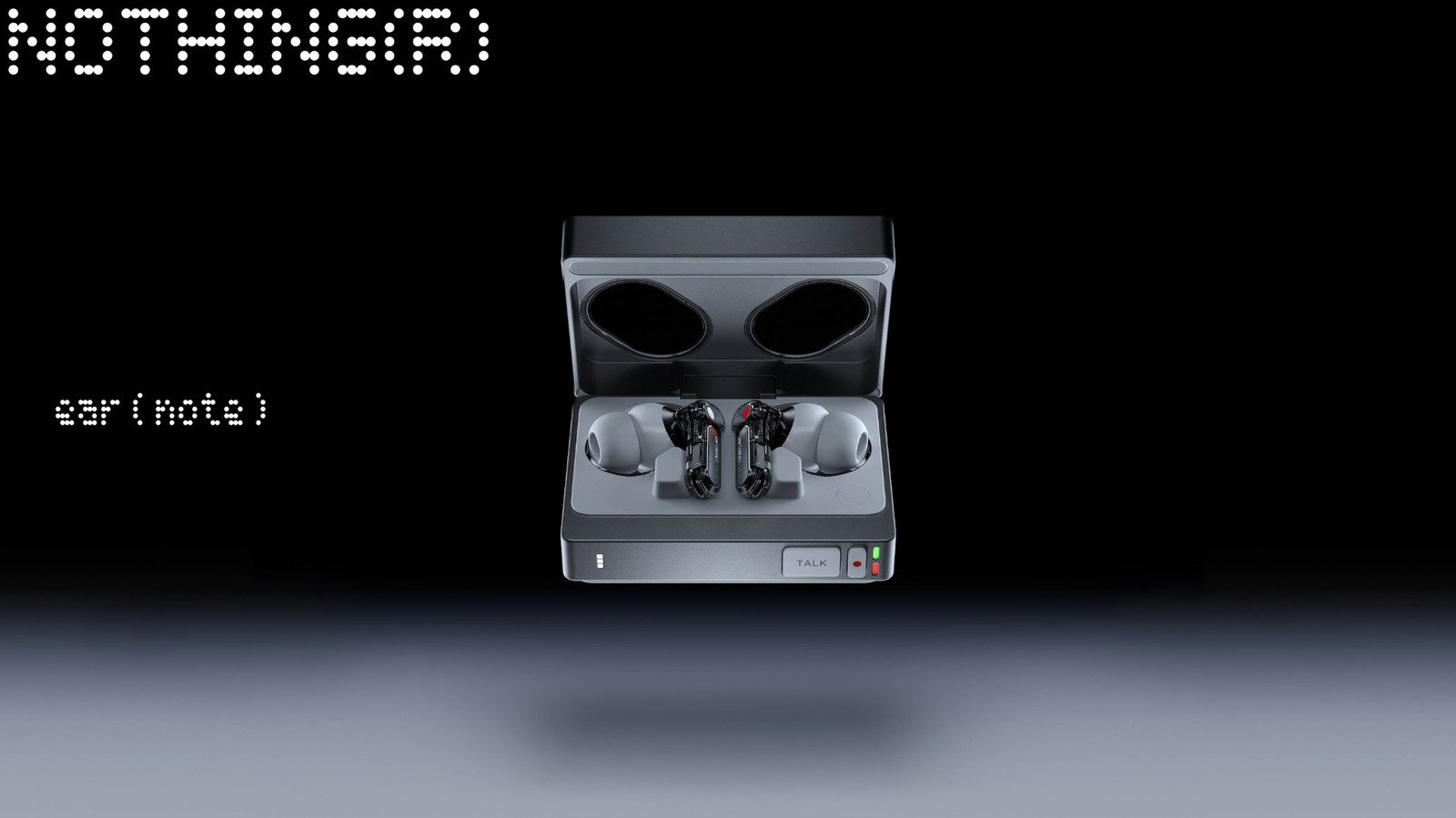
The physical construction mirrors this shift toward utilitarian hardware. Departing from the glossy, fingerprint-prone resins common in the segment, the Ear note utilizes an aluminum chassis. This choice serves two purposes: structural rigidity for internal component shielding and improved heat dissipation for the onboard processor. The inclusion of physical tactile buttons is a significant engineering decision; by eschewing capacitive touch sensors, Nothing eliminates the accidental triggers that often plague productivity-focused users during long brainstorming sessions or active meetings.
Connectivity protocols are expected to leverage the latest Bluetooth 5.4 standards, utilizing LE Audio and Auracast capabilities to manage multi-source input. This allows the device to bridge the gap between a laptop-based video conference and a physical, in-room conversation simultaneously. The AI stack, while partially cloud-reliant for complex summarization, performs the heavy lifting of voice-to-text conversion via a local neural engine. This hybrid approach ensures that sensitive meeting data is processed with a degree of privacy that purely cloud-based transcription services cannot guarantee.
Industry Landscape and Competitive Comparison
The wearable sector is currently saturated with incremental updates. Apple’s AirPods Pro and Sony’s WF-1000XM5 focus heavily on spatial audio and adaptive noise cancellation. While these are excellent for media, they lack the native hooks required for professional workflow integration. The Nothing Ear note disrupts this by treating the microphone array not just as a tool for phone calls, but as a primary input for data capture.
| Feature | Nothing Ear note | Apple AirPods Pro (Gen 2) | Sony WF-1000XM5 |
|---|---|---|---|
| Transcription | Native/On-device AI | Requires 3rd Party App | Requires 3rd Party App |
| Primary Build | Aluminum/Tactile | Polycarbonate | Recycled Plastic |
| Workflow Focus | Productivity/Note-taking | Ecosystem/Media | Audiophile/ANC |
| Control Method | Physical Buttons | Force Sensors | Capacitive Touch |
The competitive landscape suggests that the “smart” earbud market is bifurcating. On one side, we have the incumbents, which prioritize the integration of audio into their respective walled-garden ecosystems. On the other, Nothing is attempting to build a hardware-agnostic productivity tool. The success of this strategy hinges on the latency of the transcription engine and the accuracy of the summarization algorithms, which must be calibrated to distinguish between relevant meeting discourse and ambient background noise.
Practical Consumer & Enterprise Takeaways
For the professional user, the Nothing Ear note represents a significant reduction in friction. The ability to trigger a transcription session with a physical button press removes the need to unlock a smartphone or navigate through application menus during a time-sensitive conversation. This is particularly relevant for journalists, consultants, and project managers who rely on accurate records of verbal agreements.
However, prospective buyers must consider the trade-offs. The focus on productivity hardware often comes at the expense of battery life, as the dedicated AI processor draws significantly more power than a standard Bluetooth chip. Users should expect a charging cadence that reflects this, likely requiring a mid-day top-up if the device is used for extended, multi-hour transcription sessions. Furthermore, the reliance on AI summarization introduces a dependency on the company’s software ecosystem. Enterprise users must evaluate the data privacy policies governing the cloud-based portion of the summarization process, as proprietary information captured in meetings will be transmitted to remote servers.
Frequently Asked Questions
Does the Nothing Ear note require a constant internet connection for transcription?
The device utilizes a hybrid model. Basic transcription is handled via an onboard neural engine to ensure privacy and low latency. However, the advanced summarization and context-aware formatting features require a cloud connection to leverage more robust large language models.
How does the aluminum build affect comfort during long-term use?
While aluminum is denser than plastic, the design team has utilized a weight-distribution strategy that shifts the center of gravity toward the concha bowl of the ear. This prevents the buds from feeling front-heavy, allowing for comfortable wear during extended meetings.
Can the AI distinguish between multiple speakers in a group setting?
Yes, the hardware includes a beamforming microphone array that tracks spatial audio cues. By mapping the directionality of the sound, the AI can perform speaker diarization, effectively labeling different participants within the generated transcript.
The Bottom Line
The Nothing Ear note is a calculated bet on the future of work. By moving away from the crowded field of consumer audio excellence and into the niche of functional productivity, Nothing is attempting to solve a genuine problem: the loss of information in verbal communication. While the device will undoubtedly face scrutiny regarding its battery efficiency and the limitations of its AI models, it succeeds in providing a tangible, hardware-based solution for the modern professional. For those who find themselves constantly reaching for a notepad or an app during meetings, the Ear note is a compelling, if experimental, step forward in wearable utility.
 Maya Deshmukh