
Technical Specifications and Architectural Breakdown
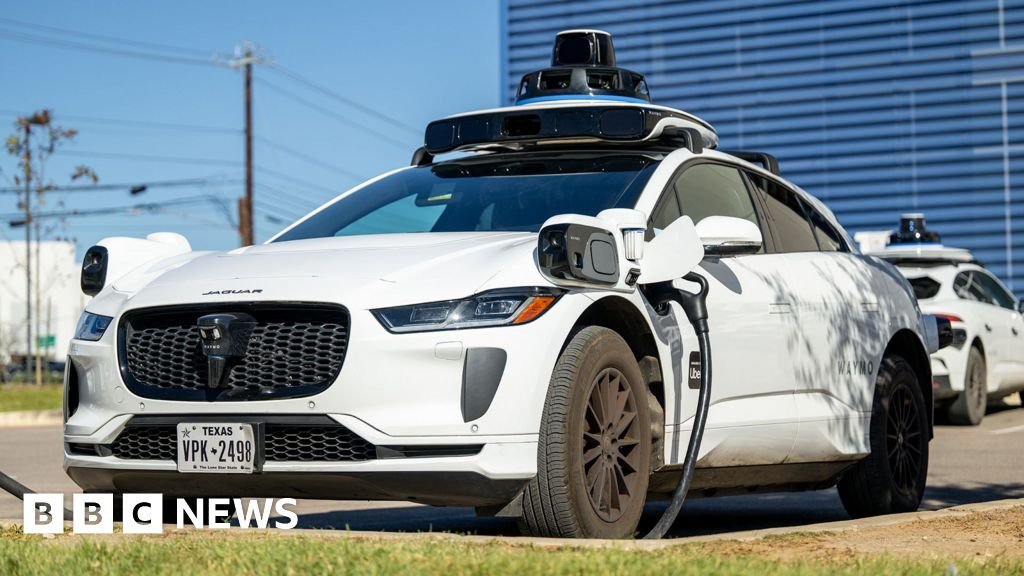
At the heart of the Waymo fleet is the fifth-generation “Waymo Driver,” a sophisticated sensor suite integrated into customized Jaguar I-PACE platforms. The architecture relies on a multi-modal perception stack designed to provide 360-degree visibility. This includes long-range LiDAR, which provides high-fidelity depth mapping; short-range LiDAR for proximity detection; and a series of high-resolution cameras that monitor lane markings, traffic signals, and peripheral hazards. The system processes these inputs through a proprietary deep-learning model that attempts to predict the intent of other human drivers.
However, the transition from urban surface streets to freeway environments introduces a logarithmic increase in complexity. On city grids, vehicles operate at lower speeds with predictable stop-and-go patterns. Freeways, by contrast, demand high-speed decision-making where the margin for error is measured in milliseconds. The specific failure point in the recent incidents involves the “semantic understanding” of non-standard road configurations. When construction crews introduce temporary lane shifts, erratic cones, or manual signalers, the current Waymo software stack struggles to reconcile these real-time environmental changes with its pre-loaded high-definition maps. The vehicles are trained to adhere to rigid protocols; when reality deviates from the digital map, the system’s ability to interpret human-directed signage remains a critical bottleneck. Engineers are now tasked with refining the “behavior prediction” module, specifically focusing on how the vehicle handles emergency vehicles and ambiguous construction zones that lack clear, consistent lane markings.
Industry Landscape and Competitive Comparison
The autonomous transit sector is currently bifurcated between companies pursuing “level 4” autonomy—where the vehicle operates without human intervention in defined areas—and those iterating on “level 2+” advanced driver-assistance systems. Waymo’s recent suspension highlights the difficulty of maintaining a service that lacks a human fallback driver. While competitors continue to test, the regulatory scrutiny now applied to Waymo will inevitably impact the entire ecosystem, forcing a shift toward more conservative deployment strategies.
| Feature | Waymo (Gen 5) | Tesla (FSD Beta) | Cruise (Legacy) |
|---|---|---|---|
| Sensor Suite | LiDAR, Radar, Cameras | Vision-only (Cameras) | LiDAR, Radar, Cameras |
| Operational Design | Geofenced/Mapping | Universal/Non-mapped | Geofenced/Mapping |
| Freeway Status | Suspended | Active (Supervised) | Suspended/Limited |
As the table illustrates, the reliance on high-definition mapping creates a dependency that makes scaling difficult. Tesla, by contrast, utilizes a vision-only approach that attempts to mimic human driving behavior without relying on pre-mapped data. While Tesla’s approach is more scalable, it requires constant human supervision. Waymo’s model is technically more robust in controlled environments but significantly more fragile when faced with the “edge cases” of highway construction and emergency management.
Practical Consumer & Enterprise Takeaways
For the average consumer, this suspension is a reminder that the “robotaxi” experience is still in its infancy. If you are a user of autonomous ride-hailing services, expect increased wait times and a return to surface-street-only routing for the foreseeable future. From an enterprise perspective, the suspension of freeway operations represents a significant blow to the efficiency of long-distance autonomous transport. Fleet operators who anticipated faster, highway-speed transit will need to recalibrate their logistics models to account for slower, city-street-only travel times.
Investors and stakeholders should view this as a necessary phase of technical maturity. The move from “demonstration” to “commercial utility” requires a level of reliability that only comes after thousands of failure-analysis cycles. Companies that prioritize transparency with regulators and invest heavily in edge-case simulation will likely emerge as the long-term winners, even if their short-term growth is tempered by these necessary regulatory pauses.
Frequently Asked Questions
Why did the California DMV intervene if there were no injuries?
The DMV’s mandate is to ensure the safe operation of vehicles on public roads. The incidents involving construction zones represented a “pattern of failure” rather than a single fluke. By intervening, the state is establishing a precedent that autonomous systems must demonstrate an ability to handle dynamic, non-standard environments before being permitted to operate at high speeds.
Will this suspension affect the development of autonomous personal vehicles?
While this specific suspension targets commercial taxi fleets, the data gathered during this period is invaluable for the entire automotive industry. The lessons learned about how sensors interpret construction zones and emergency vehicles will eventually inform the safety protocols for all consumer-grade autonomous features.
How long will the suspension last?
Waymo has not provided a firm timeline for the return of freeway operations. The company is currently engaged in a collaborative process with state regulators to update its software behavior models. A return to service will likely occur in stages, potentially starting with specific, well-marked highway segments before a full restoration of service.
The Bottom Line
The suspension of Waymo’s freeway operations is not a failure of the technology, but a necessary correction in the maturation of autonomous transit. For years, the industry operated under the assumption that perfection was a binary switch. The reality, as evidenced by these recent events, is that the gap between a vehicle that drives “well” and one that drives “safely” in every conceivable scenario is vast. By pulling back, Waymo is acknowledging that public trust is the most valuable asset in the autonomous space. The path forward will be defined by slower, more incremental progress that prioritizes rigorous safety validation over the rapid expansion of service areas. For the industry to succeed, it must prove that its systems can handle the chaotic, unpredictable nature of human-built infrastructure without compromising the safety of the public.
 Arjun Mehta
 Ishaan Verma