
Technical Specifications and Architectural Breakdown
The engineering philosophy behind the Poco X8 centers on its 6.83-inch AMOLED panel. Moving beyond the standard 1080p resolution, the device utilizes a 1.5K resolution, which strikes an optimal balance between pixel density and power consumption. By integrating a 120Hz adaptive refresh rate, the display provides fluid motion for interface navigation while scaling down during static content to conserve battery life. The inclusion of HDR10+ and Dolby Vision support ensures that the device is not merely a screen, but a capable media consumption terminal that adheres to professional color standards.
At the heart of the device lies the Snapdragon 6s Gen 4 chipset. Built on a 4nm process node, this processor is designed for thermal efficiency rather than pure, unbridled throughput. While some competitors in the price bracket opt for aggressive, high-clocked silicon that often leads to thermal throttling, the Snapdragon 6s Gen 4 maintains a consistent performance profile. This stability is critical for the target demographic—users who prioritize reliable multitasking, social media fluidity, and long-duration video streaming. Furthermore, the peak brightness of 3,500 nits is a notable technical achievement. This high-nits output is not merely a marketing metric; it provides tangible benefits in outdoor environments where ambient light often renders lesser displays illegible. The integration of this high-brightness panel with an efficient 4nm architecture suggests that Poco has prioritized a balanced thermal envelope, ensuring the device remains comfortable to hold even during extended media playback sessions.
Industry Landscape and Competitive Comparison
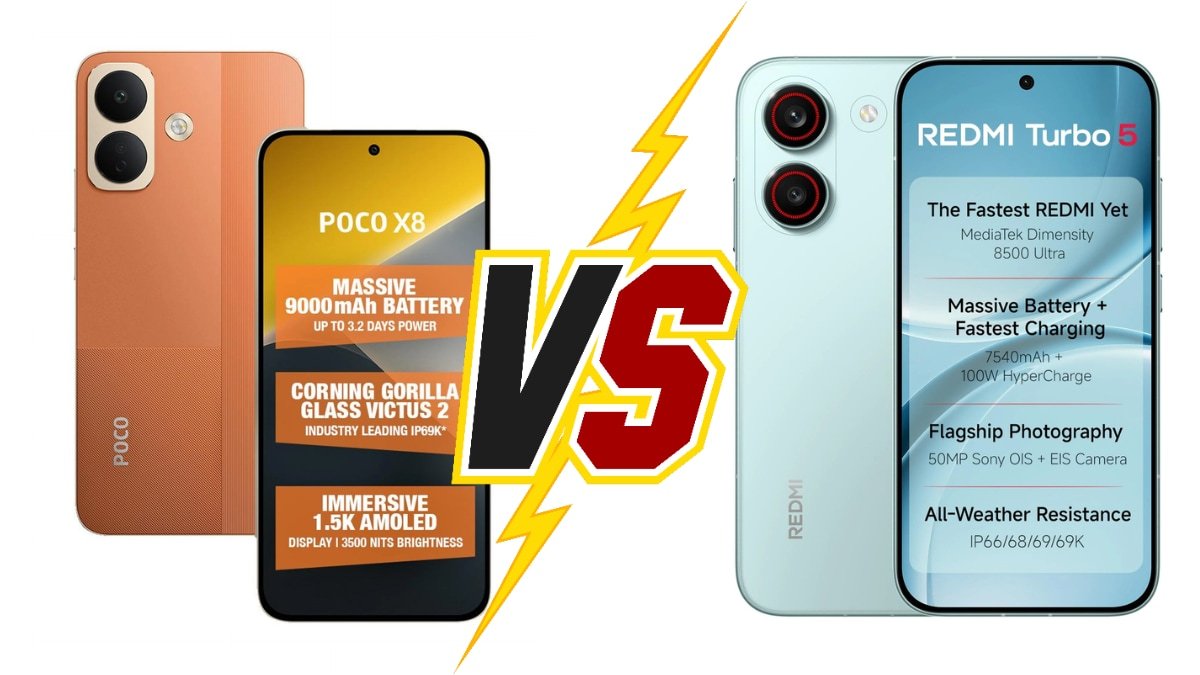
The mid-range segment is currently experiencing a bifurcation: devices either lean toward gaming-centric performance or balanced, lifestyle-oriented features. The Poco X8 firmly occupies the latter. When measured against the Redmi Turbo 5, the trade-offs become clear. The Redmi Turbo 5 utilizes the MediaTek Dimensity 8500-Ultra, which offers superior raw computational power for gaming. However, the Poco X8 counters this by offering a more refined, brighter, and larger visual interface. For the average consumer, the difference in frame rates during a heavy gaming session is often less noticeable than the difference in screen clarity while browsing or watching high-definition content.
| Feature | Poco X8 | Redmi Turbo 5 | Poco X7 (Previous Gen) |
|---|---|---|---|
| Display Size | 6.83-inch AMOLED | 6.67-inch AMOLED | 6.67-inch AMOLED |
| Chipset | Snapdragon 6s Gen 4 | Dimensity 8500-Ultra | Snapdragon 7s Gen 2 |
| Peak Brightness | 3,500 nits | 2,400 nits | 1,800 nits |
| Starting Price | Rs. 29,999 | Rs. 32,500 | Rs. 26,000 |
Practical Consumer & Enterprise Takeaways
For the average buyer, the decision to purchase the Poco X8 should be dictated by usage patterns. If your daily workflow involves heavy media consumption, document review, or professional communication, the Poco X8 offers a superior return on investment. The screen size and brightness levels provide a desktop-like experience in a mobile form factor, which is particularly beneficial for enterprise users who need to review spreadsheets or presentations on the move. The cost-benefit analysis favors the Poco X8 when compared to the Redmi Turbo 5; at a starting price of Rs. 29,999, the device undercuts its primary rival while offering a more modern display technology.
However, users who rely on their smartphones for competitive mobile gaming or intensive video editing may find the processor limitations of the Snapdragon 6s Gen 4 restrictive. The upgrade path from the previous generation, the Poco X7, is compelling primarily for those who demand better outdoor visibility and a larger display. If your current device is still performing adequately for basic tasks, the upgrade to the X8 is a luxury purchase justified by screen quality, not a necessity driven by performance gaps.
Frequently Asked Questions
Is the Poco X8 suitable for high-intensity mobile gaming?
While the device is capable of running most popular titles at medium to high settings, it is not optimized for competitive, high-frame-rate gaming. The Snapdragon 6s Gen 4 is designed for efficiency and stability. Users seeking a dedicated gaming handset should look toward devices equipped with flagship-tier silicon.
How does the 3,500-nit display affect battery longevity?
The 3,500-nit peak brightness is an adaptive feature, meaning it only reaches these levels under direct, harsh sunlight. The underlying 4nm architecture of the chipset is specifically tuned to offset the power draw of the display, ensuring the device maintains a full day of battery life under typical usage conditions.
Does the Poco X8 support expandable storage?
Yes, the device maintains support for expandable storage via a microSD card slot, which is a significant advantage for users who store large libraries of high-resolution media to take advantage of the 1.5K display.
The Bottom Line
The Poco X8 is a deliberate piece of hardware. It rejects the industry’s obsession with raw performance numbers in favor of a user experience defined by visual clarity and efficiency. By investing heavily in a 3,500-nit, 1.5K AMOLED panel, Poco has identified a gap in the market for users who prioritize the quality of their digital interactions over the speed of their processor. While it may not satisfy the niche segment of mobile gamers, it provides a superior, more stable, and more affordable platform for the vast majority of consumers. In a market crowded with iterative updates, the Poco X8 stands out by focusing on the one component that matters most: the screen.
 Maya Deshmukh